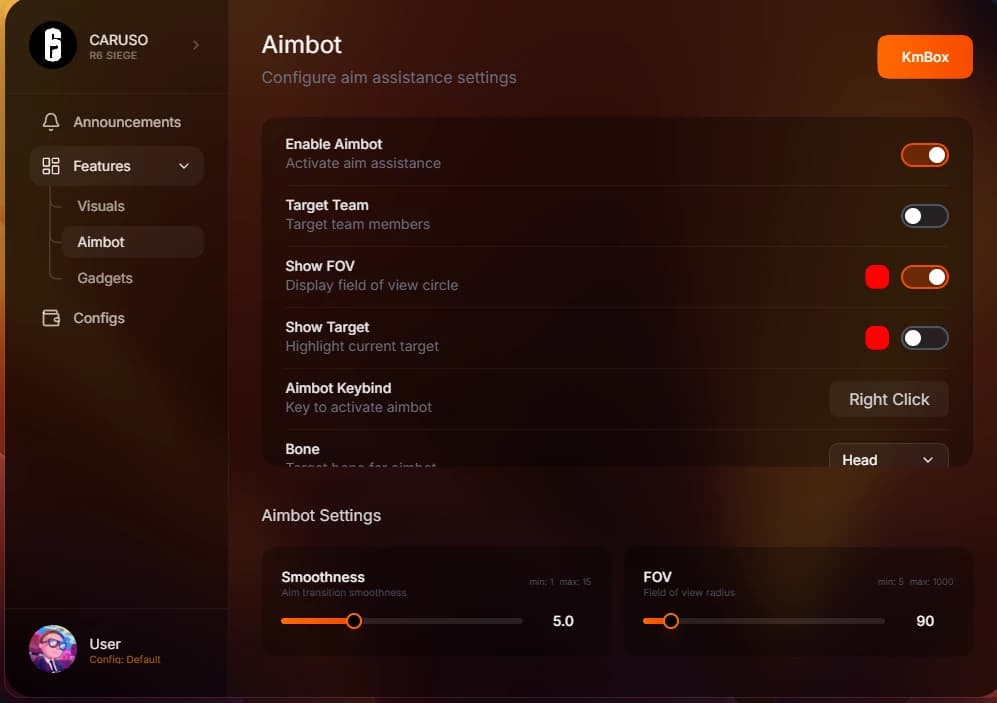
Caruso R6 DMA
Windows 10, 11 Intel / AMDUndetected
From $49.99Purchase

Get more information about DMA Cheats
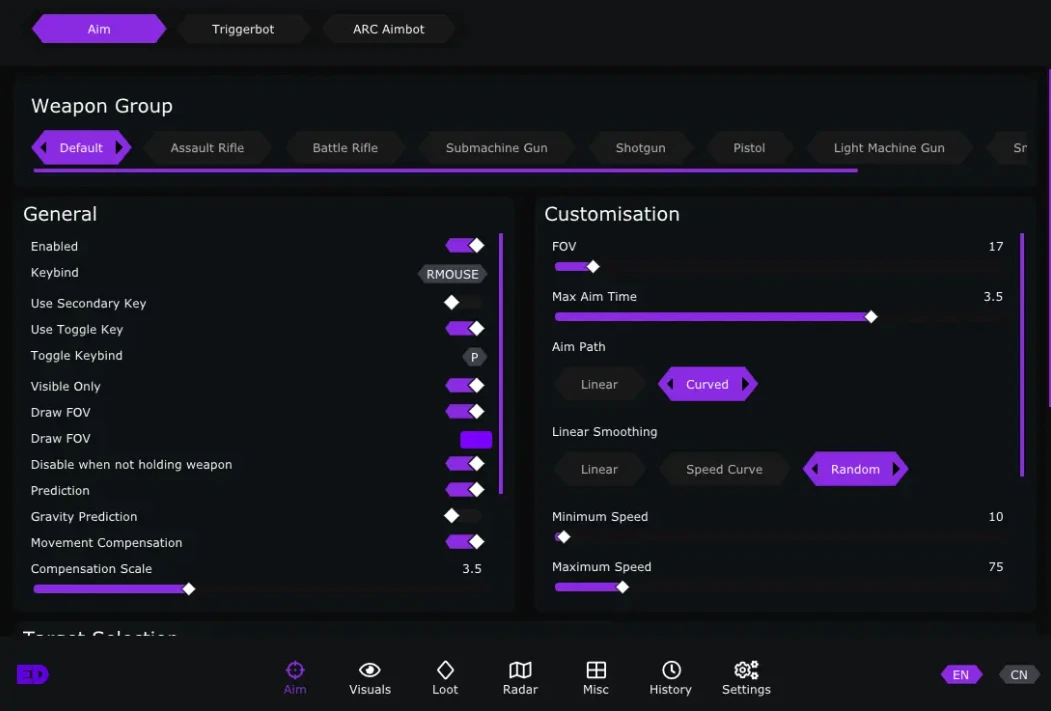



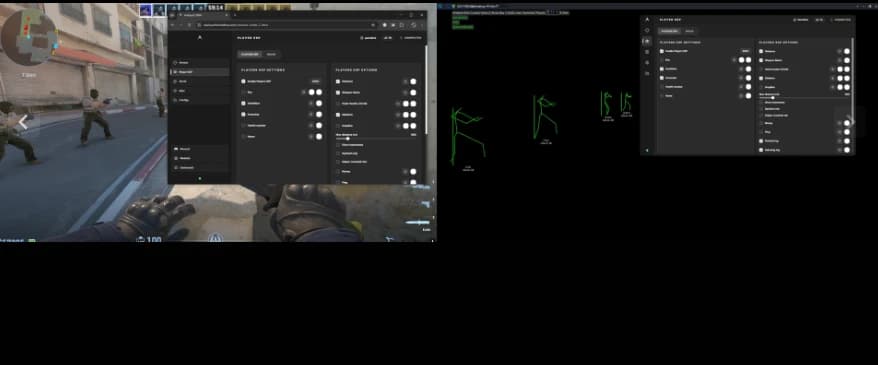
A DMA cheat reads your game's memory from a second PC over a PCIe card, so nothing runs on the machine the anti-cheat is watching — no process, no driver, no hook. That is why it is the hardest form of cheating to detect, and why it needs hardware before it needs software.
DMA stands for Direct Memory Access. A PCIe card sits in your gaming PC and reads its memory directly, over the bus, without the operating system or the game being involved. A second computer runs the actual cheat software, processes what the card reads, and draws the ESP.
The reason this matters is what it removes. Kernel-level anti-cheat — Easy Anti-Cheat, BattlEye, Vanguard — works by inspecting the machine it runs on: processes, drivers, memory hooks, loaded modules. A DMA setup puts none of those on that machine. There is nothing on the gaming PC to find, because the cheat is not on the gaming PC.
That is a genuinely different security model from an external or internal cheat, and it is the entire reason people spend hundreds of dollars on it.
This is the part most people underestimate, and it is why buying DMA software before you own the hardware is the most common expensive mistake in this category. The subscriptions sold here are software for a setup you already have or are building — they are not the card.
You need four things. A DMA card, which is an FPGA board that goes in a PCIe slot in the gaming PC. A second PC to run the cheat and do the processing. A fuser, if you want the ESP overlaid on one monitor rather than glancing at a second screen. And a KMBox or MAKCU if you want aim assistance, because something has to turn the second PC's calculations into physical mouse movement on the first.
Most cards trace back to a small number of Chinese manufacturers regardless of the brand on the box, so the model name matters less than the firmware you run on it.
Harder to detect than any software cheat, and not undetectable. Those are different claims and the difference is where people lose accounts.
The firmware is what decides it. Stock firmware ships with the card's default PCIe vendor IDs and no device emulation, and every modern anti-cheat recognises that immediately — a card running stock firmware is the easiest possible detection. Custom firmware that spoofs the device identity and answers anti-cheat probes convincingly is not optional, it is the product. Firmware validated against a given anti-cheat generally holds across every game using that anti-cheat, which is why firmware is discussed per anti-cheat rather than per title.
Anti-cheats are working on it. BattlEye have said publicly they are investigating hardware-level detection, though nothing has shipped as of mid-2026. Ricochet is the most active: it fingerprints PCIe topology when Warzone launches and flags unusual configurations for server-side review. Input devices are being looked at too — KMBox and similar hardware have known USB descriptors that anti-cheats are starting to recognise.
So the honest position is that DMA moves the detection problem from software to hardware identity. It does not delete it.
Every route to a ban that does not involve scanning your PC still works exactly as well against a DMA setup as against a $5 external.
Other players still watch you. Killcams, spectator mode, replays and reports do not care how your ESP is drawn. A DMA aimbot snapping across a room looks identical on a killcam to a software one, and the report that follows carries the same weight.
Behavioural detection still applies. Anti-cheats that analyse how you play — aim curves, reaction distributions, knowledge you should not have — are reading your actions, not your machine. Hardware changes nothing about that.
And manual review still applies. On games with community servers or active admins, someone watching you play is a detection method that no amount of PCIe spoofing addresses.
DMA answers one question extremely well: is there cheat software on this computer. It answers no other question at all.
For most people, no — and it is worth being direct about that rather than selling upward.
The arithmetic works in two situations. The first is a hardware ban you cannot clear: if a machine already carries an EAC hardware association, a DMA setup on a second account sidesteps the software layer entirely. The second is an account genuinely worth more than the hardware — years of progression, rare items, an EFT account with a stash you would not want to rebuild.
Outside those two cases, an external cheat on a throwaway account is a better use of the money, and it is not close. You can buy a lot of replacement accounts for the cost of a card, a fuser, a KMBox and a second PC.
The other cost people forget is time. A DMA setup is a build. It needs BIOS changes, firmware flashing, cabling, and troubleshooting when a game patch moves offsets. If that sounds like a project you would enjoy, it is a reasonable one. If you want to play tonight, it is not.
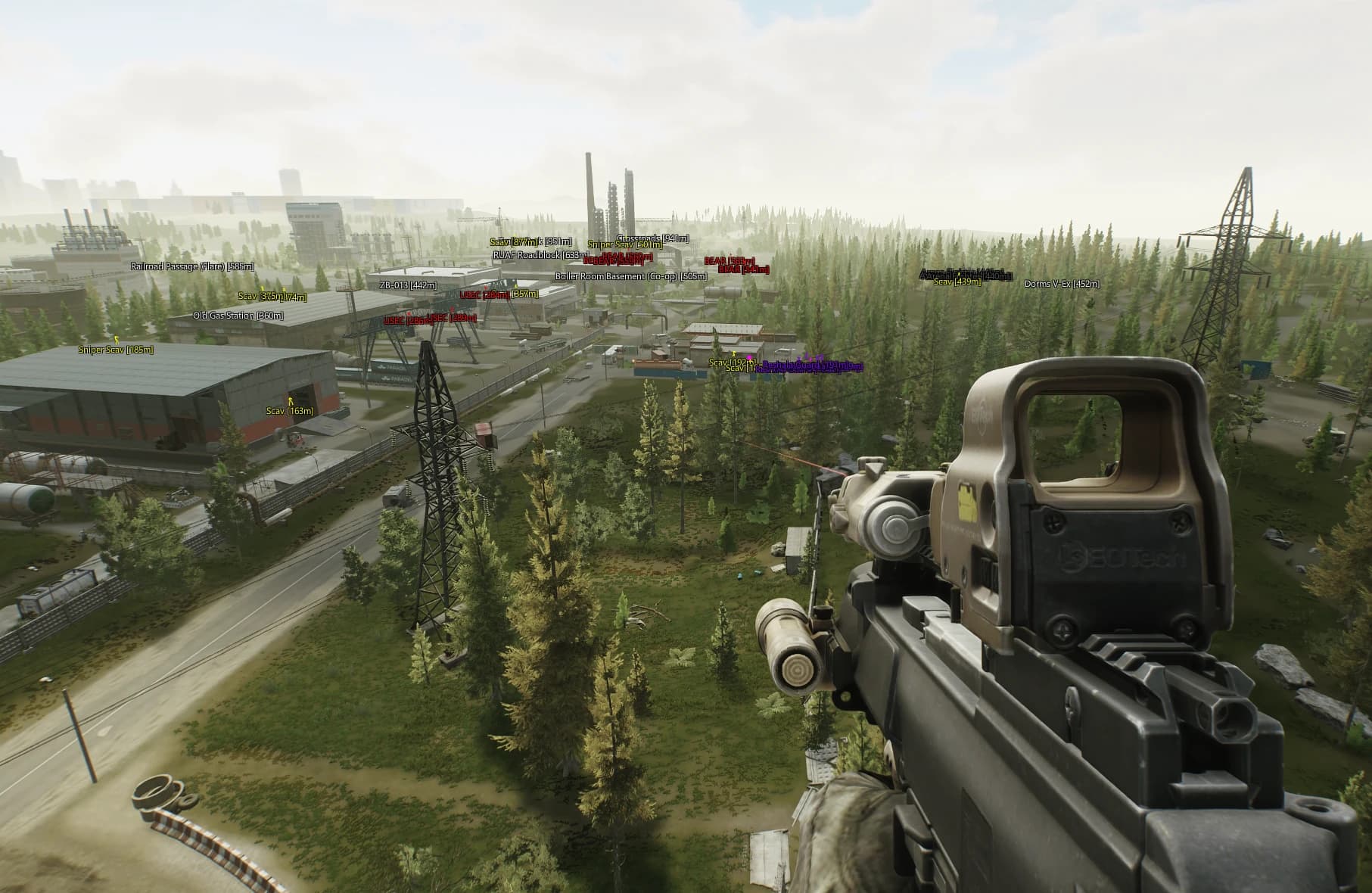
Extraction shooters first, because that is where the arithmetic is most favourable. Escape From Tarkov is the classic case: raids are long, gear is expensive, a wipe represents months of progress, and the information advantage of full loot and player ESP is enormous. The same logic increasingly applies to ARC Raiders.
Survival games follow for similar reasons. Rust punishes a lost base far more than a lost fight, so knowing who is nearby and what is inside a compound is worth more than aim.
Competitive shooters are the third group, and the motivation there is different: it is about surviving anti-cheat on titles where software cheats are detected quickly and bans are permanent. Rainbow Six Siege, CS2, Apex Legends and Fortnite all fall into this group, where the appeal of DMA is not that it does more but that it is harder to catch.
Check which anti-cheat the firmware is validated against, not which game. Firmware works at the PCIe level, beneath any game-specific logic, so a firmware proven against BattlEye tends to hold across BattlEye titles. Anyone selling you firmware per game is describing the wrong layer.
Check the update cadence against the game's patch schedule. DMA software still reads game memory, and offsets still move when a game updates. Hardware does not exempt a product from breaking on patch day.
Check what the product actually includes. Some are radar or ESP only, which is the safer configuration anyway; others include aim assistance, which requires a KMBox on top. Buying an aim-capable product with no input device means paying for a feature you cannot use.
And check the live status on the product page before you buy. Status here comes from our supplier feed rather than being written into the sales copy, so it can tell you something you would rather not hear.
A cheat that reads your game's memory through a PCIe card, with the software running on a separate PC. Nothing runs on the gaming machine, so there is no process, driver or hook for kernel-level anti-cheat to find.
Yes, always. There is no single-PC DMA setup — the entire point is that the cheat runs on hardware the anti-cheat cannot scan. A used mini PC with four cores, AVX2 and 8GB of RAM is enough to start.
Realistically $400 to $1,000 all in. A card runs roughly $100 to $420, a fuser $60 to $150, a KMBox or MAKCU $30 to $100, and a second PC anywhere from $100 used to $600 built.
No. They are much harder to detect than software cheats, which is not the same thing. Firmware is the deciding factor: stock firmware with default PCIe vendor IDs is caught immediately, and anti-cheats are actively working on hardware-level detection.
Easily. Killcams, replays, spectators, reports, behavioural detection and server admins all work exactly as well against a DMA user. DMA answers whether there is cheat software on your PC and nothing else.
Less than the firmware. Most cards come from a small number of manufacturers regardless of branding, so the firmware that spoofs device identity and answers anti-cheat probes is what actually separates a working setup from a detected one.
Only for aim assistance. The second PC cannot move your mouse on its own, so a KMBox or MAKCU is what turns its calculations into physical input. ESP and radar need no input device at all.
It merges your game output and the second PC's overlay into a single monitor feed, so the ESP appears over your game instead of on a second screen. It is a convenience rather than a requirement.
For most people, no. It makes sense if you already carry a hardware ban you cannot clear, or if the account is worth more than the hardware. Otherwise an external on a throwaway account is a far better use of the same money.
Yes. They still read game memory, so offsets still move on patch day. Hardware changes how you are detected, not whether the software needs updating.