Nocturnal Valorant
Windows 10, 11 Intel / AMDUndetected
From $7.99 to $39.99Purchase

Get more information about Valorant Cheats
Valorant is the hardest game on this site to cheat on. Riot Vanguard is a signed kernel driver that starts with Windows, before anything you load, and Riot's hardware bans are permanent. Cheats for Valorant exist and work, but every one of them needs a spoofer and hardware you are prepared to lose.
Because Vanguard is not an anti-cheat that runs alongside the game. It is a kernel-mode driver configured to start at boot, which means it is already resident before any loader, spoofer or overlay you launch afterwards. EAC and BattlEye start when the game does; Vanguard starts when Windows does.
That ordering is the entire difference. On Rust or Apex, software loaded before the anti-cheat has a structural advantage. On Valorant there is no "before" — you are always loading into a system that is already being watched.
Riot also enforce differently. Bans are hardware-based, permanent in practice, and applied without the wave delay common on Facepunch or Respawn titles.
Almost every cheat on this site asks you to disable Secure Boot. Vanguard on Windows 11 requires Secure Boot to be enabled, and refuses to let the game start without it. Those two requirements are in direct opposition, and reconciling them is the whole of a Valorant setup.
This is the single most common reason a Valorant purchase fails on arrival. People apply the routine that worked for their Rust cheat, Valorant refuses to launch, and they assume the product is broken. It is not — the setup for this game is genuinely different and the supplied instructions have to be followed exactly rather than adapted.
If you are not willing to follow a setup procedure precisely, Valorant is the wrong game to buy a cheat for.

Yes, without meaningful exception. Vanguard collects hardware identifiers from boot, and Riot ban on them permanently rather than banning an account and moving on.
The practical consequence is that a Valorant ban does not cost you an account, it costs you the machine's clean status. A new account on the same hardware will be banned as soon as it is recognised, and no amount of reinstalling Windows changes what the motherboard reports.
Buying a Valorant cheat without a spoofer is, in effect, buying a permanent hardware ban with a few days of play attached.
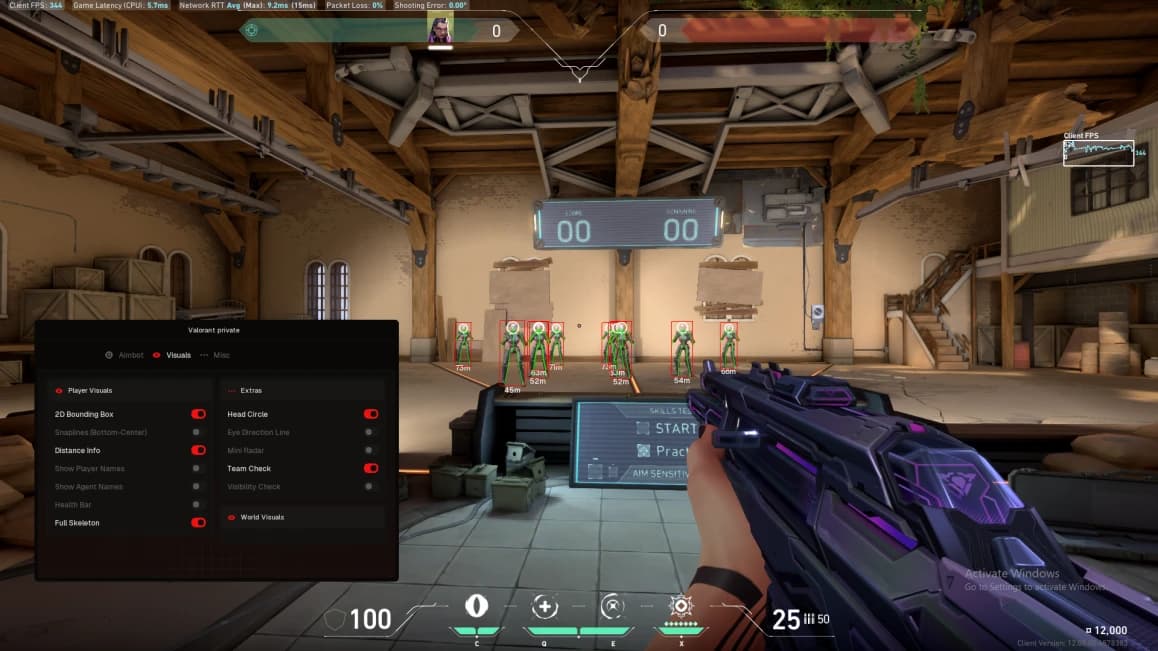
Information, mostly, and that is not a consolation prize. Valorant is a game of five-second decisions made on incomplete information: is the site taken, is their ultimate up, is the lurker rotating. ESP answers those, and none of it appears in anyone else's point of view.
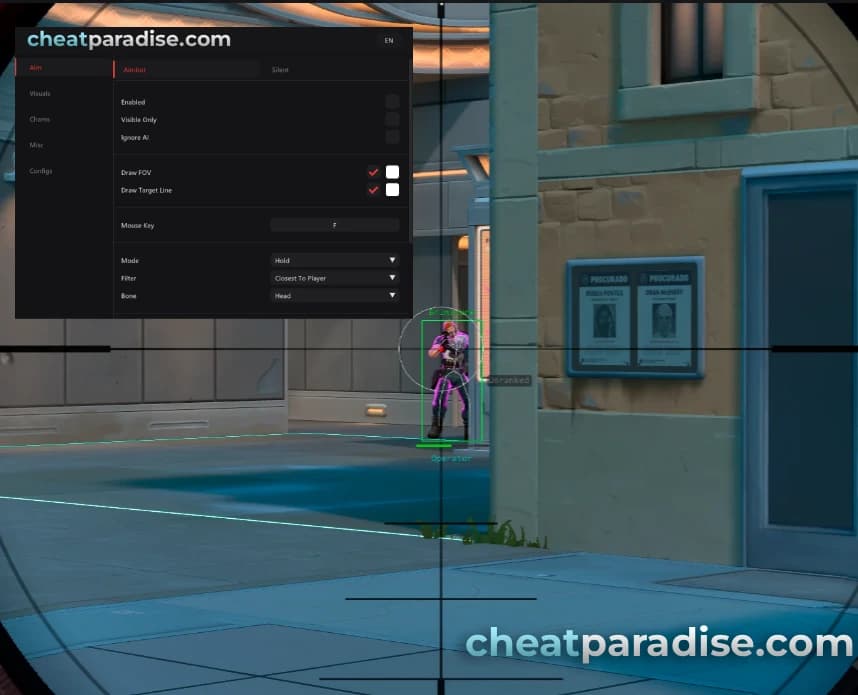
Aim assistance exists in these products and it is deliberately restrained — narrow field of view, heavy smoothing, body targeting by default. That restraint is not a limitation, it is the only configuration that survives contact with Valorant's playerbase. Every match is recorded, the community reports constantly, and a snapping aimbot is identified from a killcam within one round.
The realistic value is knowing things. The realistic risk comes almost entirely from aim.
Two paths, and they are not equally likely for everyone. The first is detection: Vanguard finds something, and the ban is immediate and hardware-wide. The second is review after a report, which on Valorant is unusually effective because every match has a full recording and the playerbase is quick to escalate.
Most people are caught by the second path, not the first. A detected build takes everyone using it at once and there is nothing you can do about that beyond checking status before you play. Being obvious is a choice you make round by round.
The accounts that last are the ones playing at a level slightly above their own rather than at a level nobody in the lobby believes.
There are two here and the difference is straightforward. Nocturnal includes restrained aim assistance alongside its ESP; UnnamedTech Valorant External concentrates on information and utility awareness without it.
If you are new to cheating on Valorant, the external information-first option is the better starting point — it removes the behaviour that gets people reported while keeping the part that actually wins rounds. If you understand the risk and want aim assistance as well, Nocturnal is the one that has it.
Neither is a low-risk purchase, and any page telling you otherwise about a Vanguard-protected game is selling rather than informing.
Builds are undetected until they are not, and on Valorant that window is shorter than on any other game listed here. Check the live status on the product page immediately before you play — it syncs from the supplier feed rather than being edited by hand.
Vanguard starts with Windows, so on a normal system there is nothing that loads before it. That ordering is exactly what makes Valorant harder than EAC or BattlEye titles.
Vanguard on Windows 11 requires Secure Boot enabled, which is the opposite of what most loaders here ask for. Resolving that conflict is the setup, and the supplied instructions for this game differ from every other product on the site.
That is Riot's standard enforcement, and it is permanent in practice. A new account on the same machine will not help you, which is why a spoofer is treated as a requirement rather than an accessory.
Against detection, no — a detected build is detected regardless of which features you enabled. Against being reported and reviewed, substantially, because there is nothing visible in a killcam.
No. Riot bans are permanent, take everything on the account, and are not realistically appealable. Use an account with nothing on it.
Nearly always Secure Boot, TPM, or another kernel driver Vanguard refuses to load alongside. Work through the supplied setup steps in order before contacting support — a routine borrowed from another game will not apply.
Instant. The licence lands in your dashboard and email as soon as payment confirms; crypto typically clears in a few minutes.